
The Aura Farmer’s Dilemma: Hyper-Consumption and the Death of Personal Style
When every wardrobe addition is a calculated play for digital identity, what happens when the endless scroll leaves us completely empty?
We are living through a massive culture shift where our clothing is no longer just textile; it is digital currency. Welcome to the era of the "Aura Farmer." Propelled by TikTok's fixation on tracking arbitrary algorithmic value through style choices, our daily outfits have transformed into an optimization game. We dress to accumulate social clout, treating physical garments like video game experience points. But as the cycle of micro-trends accelerates into a relentless blur, a quiet exhaustion is setting in. The digital mirror is cracking, leaving a generation asking a singular, glaring question: How many aura points do you lose when buyer fatigue finally hits?
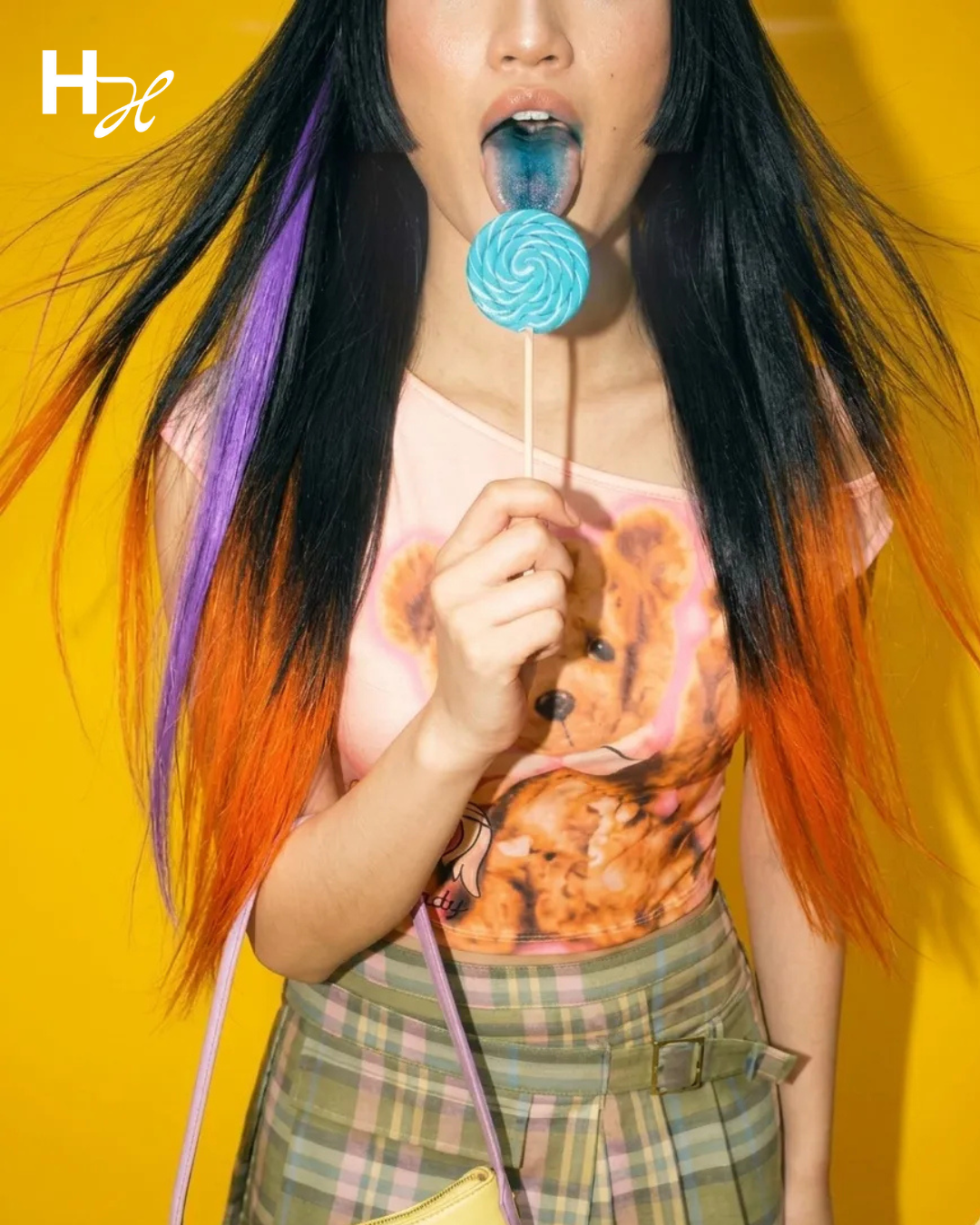
Photo: HOMMEHEART
The tension lies in how we attempt to purchase a subcultural identity off a rack. In our latest HOMMEHEART Studios editorial, this gridlock is brought into focus. A custom-styled Marc Jacobsslip dress—featuring an innocent, vulnerable fawn motif—is paired intentionally with aggressive cyber-goth platform boots and a pentagram choker. It is a visual manifestation of modern armor. We wrap ourselves in nostalgia while simultaneously putting up high-gloss emotional walls to survive an insatiable, hyper-capitalist digital landscape.
This juxtaposition exposes the post-ironic consumer loop. We buy things to feel an immediate connection, only to feel detached because the next micro-trend is already occupying our feeds. It forces an existential realization: are we building actual, lived-in personal style, or are we simply buying transient textures to feed an algorithm that doesn't care about us anyway?
Historically, fashion consumption was loud, physical, and deeply rooted in the real world. Think back to the mid-2000s paparazzi gold standard: Paris Hilton walking out of Kitsonwith heavy, screen-printed bags, or Hilary Duff leaving Intermix flanked by cameras. Those moments were high-energy spectacles of genuine physical indulgence. Today, the consumption has turned entirely inward, shrinking down to the quiet isolation of an online shopping cart and a dopamine hit that dissolves the second we tap "Place Order."
The current wave of buyer fatigue shouldn't be feared as a dead-end for style. Instead, we should view it as a necessary collective sigh. It is a hard biological boundary against the micro-trend industrial complex. It is a visual and mental signal to completely stop collecting superficial aesthetic boxes, log off the feed, and finally start living in the clothes we already own.